From energy efficiency and waste reduction to business strategy and innovation, The Heritage Group’s inaugural Sustainability Summit explored how practical decisions can create meaningful environmental and business value.
Progress doesn’t always require sweeping changes or ambitious new initiatives. Sometimes, it starts with asking better questions, challenging established practices and making small improvements that add up over time.
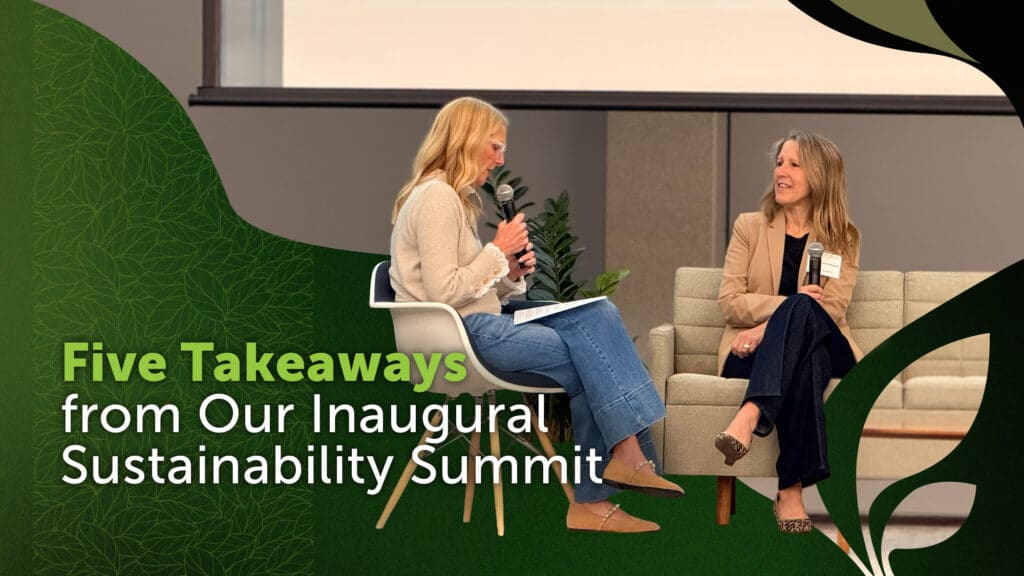
That was a recurring theme at The Heritage Group’s inaugural Fall Sustainability Summit, hosted by Anne Smith, Senior Director of Sustainability. The event brought together individuals from across The Heritage Group’s operating companies and corporate teams, along with industry experts, to explore how sustainability can be integrated into everyday business decisions.
Through discussions spanning operational efficiency, waste reduction, strategic planning and innovation, attendees shared practical approaches to making sustainability both achievable and valuable.
Here are five takeaways from the day:
1. Focus on progress, not perfection.
One of the day’s clearest messages: Setting meaningful targets and measuring are important, but they shouldn’t prevent organizations from taking practical steps to improve today.
During a fireside chat about integrating sustainability into business strategy, former General Motors sustainability leader Kristen Siemen emphasized the importance of setting simple, achievable goals and acting with urgency. Rather than spending excessive time developing metrics or debating how to measure success, organizations can start by identifying opportunities to improve, establishing realistic targets and building momentum through incremental changes.
The objective isn’t perfection. It’s continuous improvement.
2. Data is only valuable when it drives action.
Measuring energy consumption is important. Understanding what to do with that information is where the real value begins.
Christine Daugherty, Vice President and Chief Sustainability Officer at Conagra Brands, shared how her company puts that idea into practice through a set of connected programs that identify opportunities, fund them and automate ongoing insight. The common thread is practical execution, combining expertise, capital discipline and technology to improve operations.
It starts with finding the opportunities. Conagra participates in the U.S. Department of Energy’s Better Plants program, a voluntary partnership built around continuous energy improvement. The program gives plant teams practical, no-cost resources, from hands-on training and site walk-throughs to outside technical assessments and access to diagnostic equipment to help identify where to improve.
Better measurement is what turns those opportunities into action. Conagra plants have borrowed ultrasonic flow meters through the program to understand hot water use, including during freezer cleaning cycles. The setup was simple, and the loan avoided the cost of renting specialized equipment.
Milestone Contractors shared a similar approach from its asphalt plants, where live energy monitoring tracks fuel use and sends real-time alerts when a plant operates outside allowed parameters. The team is exploring the same approach for electricity.
Discussions about operational efficiency highlighted how greater visibility into energy use can change the way facilities approach consumption and accountability.
For example, examining how much energy a facility uses when production is shut down can reveal unexpected opportunities for savings. Making that information visible across facilities can also encourage shared learning, healthy competition and better operational decisions.
The lesson extends beyond energy: Collecting data isn’t the finish line. Using it to make informed decisions is what drives improvement.
3. Sustainability works best when it’s part of how business gets done.
Sustainability doesn’t have to operate as a separate initiative. At The Heritage Group, Sustainability, Business Excellence and Innovation are interconnected capabilities that help businesses improve efficiency, solve problems and create long-term value. Throughout the summit, speakers demonstrated how these practical efforts can reinforce one another to strengthen our portfolio.
At the summit, representatives from Milestone and US Aggregates explored the connection between Sustainability and Business Excellence, two of our core capabilities and how their work can reinforce one another. Monument Chemical also shared how sustainability considerations are being integrated into strategic sourcing and capital planning decisions.
Concrete examples brought the connection to life. Milestone’s team explained that a significant share of the energy used in hot mix asphalt production goes toward removing water from aggregates and reclaimed asphalt pavement, so managing moisture at stockpiles can meaningfully reduce fuel demand. At US Aggregates, relocating haul roads at its quarries shortened haul distances and reduced slopes, improving fuel efficiency while reducing wear on mobile equipment. And at Monument Chemical, sustainability-designated projects are built into the company’s multi-year planning, justified on cost savings, growth or reliability.
Even something as straightforward as asking whether equipment is the most energy-efficient option before making a purchase can influence long-term operating costs and environmental impact.
The broader opportunity is to make sustainability a natural consideration in decisions companies are already making.
4. Good environmental solutions can also make good business sense.
For sustainability initiatives to gain traction, they often need to demonstrate more than environmental benefits. They also need to make financial and operational sense.
Envita Solutions highlighted this connection through its work, helping industrial customers identify waste reduction opportunities and find solutions that create business value.
One example involved Subaru of Indiana Automotive, where Envita’s work supporting the facility’s zero-waste-to-landfill efforts included an innovative approach to shipping materials. Rather than relying on single-use packaging for overseas shipments, reusable clamshell packaging provides an alternative that can be used across multiple journeys.
The example illustrates an important principle: Reducing waste isn’t simply about what happens after materials are used. It’s also about rethinking how those materials are selected, managed and reused in the first place.
5. Innovation can unlock opportunities hiding in plain sight.
Some sustainability challenges require new technologies. Others require a fresh perspective on familiar problems.
Throughout the summit, speakers explored opportunities to rethink materials, reduce waste and improve existing processes. Examples included discussions about repurposing manufacturing byproducts and finding productive uses for materials that might otherwise be discarded.
The day’s closing session connected sustainability with another of THG’s core capabilities: Innovation. Attendees were encouraged to identify environmental challenges that could potentially be addressed through technical or commercial innovation. The conversation reinforced the value of collaboration across THG’s portfolio, where different companies bring unique expertise, perspectives and capabilities to shared challenges.
Turning ideas into action
If there was one message connecting the day’s conversations, it was that meaningful sustainability progress doesn’t have to be complicated.
It requires a willingness to examine existing practices, make informed decisions and look for opportunities where environmental responsibility and business performance intersect.
For The Heritage Group, the inaugural summit created an opportunity to strengthen connections across its businesses, share practical experiences and identify ways to build on one another’s expertise. By bringing together different perspectives and capabilities, THG hopes to create new opportunities for collaboration and shared value.
“One of the greatest opportunities we have at The Heritage Group is learning from one another. My hope is that everyone left the summit with at least one idea, connection or opportunity they can bring back to their business. By sharing what works and building on each other’s experiences, we can create meaningful value across our companies,” shares Anne.
And while the conversations covered a wide range of industries and challenges, the underlying message was remarkably consistent: Start where you are, focus on what matters and keep getting better.